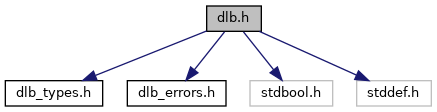

Go to the source code of this file.
Macros | |
| #define | DLB_VERSION 0x30700 |
Functions | |
| int | DLB_Init (int ncpus, const_dlb_cpu_set_t mask, const char *dlb_args) |
| Initialize DLB library and all its internal data structures. Must be called once and only once by each process in the DLB system. More... | |
| int | DLB_Finalize (void) |
| Finalize DLB library and clean up all its data structures. Must be called by each process before exiting the system. More... | |
| int | DLB_PreInit (const_dlb_cpu_set_t mask, char ***next_environ) |
| Pre-Initialize process. More... | |
| int | DLB_Enable (void) |
| Enable DLB and all its features in case it was previously disabled, otherwise it has no effect. More... | |
| int | DLB_Disable (void) |
| Disable DLB actions for the calling process. More... | |
| int | DLB_SetMaxParallelism (int max) |
| Set the maximum number of resources to be used by the calling process. More... | |
| int | DLB_UnsetMaxParallelism (void) |
| Unset the maximum number of resources to be used by the calling process. More... | |
| int | DLB_CallbackSet (dlb_callbacks_t which, dlb_callback_t callback, void *arg) |
| Setter for DLB callbacks. More... | |
| int | DLB_CallbackGet (dlb_callbacks_t which, dlb_callback_t *callback, void **arg) |
| Getter for DLB callbacks. More... | |
| int | DLB_Lend (void) |
| Lend all the current CPUs. More... | |
| int | DLB_LendCpu (int cpuid) |
| Lend a specific CPU. More... | |
| int | DLB_LendCpus (int ncpus) |
| Lend a specific amount of CPUs, only useful for systems that do not work with cpu masks. More... | |
| int | DLB_LendCpuMask (const_dlb_cpu_set_t mask) |
| Lend a set of CPUs. More... | |
| int | DLB_Reclaim (void) |
| Reclaim all the CPUs that are owned by the process. More... | |
| int | DLB_ReclaimCpu (int cpuid) |
| Reclaim a specific CPU that are owned by the process. More... | |
| int | DLB_ReclaimCpus (int ncpus) |
| Reclaim a specific amount of CPUs that are owned by the process. More... | |
| int | DLB_ReclaimCpuMask (const_dlb_cpu_set_t mask) |
| Reclaim a set of CPUs. More... | |
| int | DLB_AcquireCpu (int cpuid) |
| Acquire a specific CPU. More... | |
| int | DLB_AcquireCpus (int ncpus) |
| Acquire a specific amount of CPUs. More... | |
| int | DLB_AcquireCpuMask (const_dlb_cpu_set_t mask) |
| Acquire a set of CPUs. More... | |
| int | DLB_AcquireCpusInMask (int ncpus, const_dlb_cpu_set_t mask) |
| Acquire some CPUs from a subset of CPUs. More... | |
| int | DLB_Borrow (void) |
| Borrow all the possible CPUs registered on DLB. More... | |
| int | DLB_BorrowCpu (int cpuid) |
| Borrow a specific CPU. More... | |
| int | DLB_BorrowCpus (int ncpus) |
| Borrow a specific amount of CPUs. More... | |
| int | DLB_BorrowCpuMask (const_dlb_cpu_set_t mask) |
| Borrow a set of CPUs. More... | |
| int | DLB_BorrowCpusInMask (int ncpus, const_dlb_cpu_set_t mask) |
| Borrow some CPUs from a subset of CPUs. More... | |
| int | DLB_Return (void) |
| Return claimed CPUs of other processes. More... | |
| int | DLB_ReturnCpu (int cpuid) |
| Return the specific CPU if it has been reclaimed. More... | |
| int | DLB_ReturnCpuMask (const_dlb_cpu_set_t mask) |
| Return a set of CPUs if some of them have been reclaimed. More... | |
| int | DLB_PollDROM (int *ncpus, dlb_cpu_set_t mask) |
| Poll DROM module to check if the process needs to adapt to a new mask or number of CPUs. More... | |
| int | DLB_PollDROM_Update (void) |
| Poll DROM module to check if the process needs to adapt to a new mask and update it if necessary using the registered callbacks. More... | |
| int | DLB_CheckCpuAvailability (int cpuid) |
| Check whether the specified CPU is being used by another process. More... | |
| int | DLB_Barrier (void) |
| Perform a DLB Barrier among processes in the node. More... | |
| int | DLB_BarrierAttach (void) |
| Attach process to the DLB Barrier team. More... | |
| int | DLB_BarrierDetach (void) |
| Detach process from the DLB Barrier team. More... | |
| dlb_barrier_t * | DLB_BarrierNamedRegister (const char *barrier_name, dlb_barrier_flags_t flags) |
| Register, or obtain, a named barrier. More... | |
| dlb_barrier_t * | DLB_BarrierNamedGet (const char *barrier_name, dlb_barrier_flags_t flags) |
| Register, or obtain, a named barrier. More... | |
| int | DLB_BarrierNamed (dlb_barrier_t *barrier) |
| Perform a DLB Barrier using the named barrier among processes in the node. More... | |
| int | DLB_BarrierNamedAttach (dlb_barrier_t *barrier) |
| Attach process to the named barrier team. More... | |
| int | DLB_BarrierNamedDetach (dlb_barrier_t *barrier) |
| Detach process from the named barrier team. More... | |
| int | DLB_SetVariable (const char *variable, const char *value) |
| Change the value of a DLB internal variable. More... | |
| int | DLB_GetVariable (const char *variable, char *value) |
| Query the value of a DLB internal variable. More... | |
| int | DLB_PrintVariables (int print_extended) |
| Print DLB internal variables. More... | |
| int | DLB_PrintShmem (int num_columns, dlb_printshmem_flags_t print_flags) |
| Print the data stored in the shmem. More... | |
| const char * | DLB_Strerror (int errnum) |
| Obtain a pointer to a string that describes the error code passed by argument. More... | |
| int | DLB_SetObserverRole (bool thread_is_observer) |
| Modify the current thread DLB role to either observer or particpant. More... | |
| int | DLB_GetVersion (int *major, int *minor, int *patch) |
| Return the DLB version. More... | |
| int | DLB_GetGPUAffinity (char *buffer, size_t buffer_size, bool full_uuid) |
| int | DLB_AutoSizerStart (void) __attribute__((deprecated)) |
| int | DLB_AutoSizerEnd (void) __attribute__((deprecated)) |
Macro Definition Documentation
◆ DLB_VERSION
| #define DLB_VERSION 0x30700 |
Function Documentation
◆ DLB_Init()
| int DLB_Init | ( | int | ncpus, |
| const_dlb_cpu_set_t | mask, | ||
| const char * | dlb_args | ||
| ) |
Initialize DLB library and all its internal data structures. Must be called once and only once by each process in the DLB system.
- Parameters
-
[in] ncpus optional, initial number of CPUs, or 0 [in] mask optional, initial CPU mask to register, or NULL [in] dlb_args optional parameter to overwrite DLB_ARGS options, or NULL
- Returns
- DLB_SUCCESS on success
- DLB_ERR_INIT if DLB is already initialized
- DLB_ERR_PERM if DLB cannot register the mask passed by argument
- DLB_ERR_NOMEM if DLB cannot allocate more processes
- DLB_ERR_NOCOMP if initialization options are incompatible
Parameters ncpus and mask are used to register CPUs owned by the calling process into the system. Both are optional but, if provided, mask takes precedence. Parameter dlb_args can be used in conjunction with DLB_ARGS; the latter takes precedence in case of conflicting options.
◆ DLB_Finalize()
| int DLB_Finalize | ( | void | ) |
Finalize DLB library and clean up all its data structures. Must be called by each process before exiting the system.
- Returns
- DLB_SUCCESS on success
- DLB_NOUPDT if DLB is not initialized
◆ DLB_PreInit()
| int DLB_PreInit | ( | const_dlb_cpu_set_t | mask, |
| char *** | next_environ | ||
| ) |
Pre-Initialize process.
- Parameters
-
[in] mask initial CPU mask to register [in,out] next_environ environment to modify if the process is going to fork-exec
- Returns
- DLB_SUCCESS on success
- DLB_ERR_PERM if DLB cannot register the mask passed by argument
- DLB_ERR_NOMEM if DLB cannot allocate more processes
◆ DLB_Enable()
| int DLB_Enable | ( | void | ) |
Enable DLB and all its features in case it was previously disabled, otherwise it has no effect.
- Returns
- DLB_SUCCESS on success
- DLB_NOUPDT if DLB is already enabled
- DLB_ERR_NOINIT if DLB is not initialized
It can be used in conjunction with DLB_Disable() to delimit sections of the code where DLB calls will not have effect.
◆ DLB_Disable()
| int DLB_Disable | ( | void | ) |
Disable DLB actions for the calling process.
- Returns
- DLB_SUCCESS on success
- DLB_NOUPDT if DLB is already disabled
- DLB_ERR_NOINIT if DLB is not initialized
This call resets the original resources for the process and returns any external CPU it may be using at that time. While DLB is disabled there will not be any resource sharing for this process.
◆ DLB_SetMaxParallelism()
| int DLB_SetMaxParallelism | ( | int | max | ) |
Set the maximum number of resources to be used by the calling process.
- Parameters
-
[in] max max number of CPUs
- Returns
- DLB_SUCCESS on success
- DLB_ERR_NOINIT if DLB is not initialized
- DLB_ERR_NOLEWI if –lewi is not enabled
Used to delimit sections of the code that the developer knows that only a maximum number of CPUs can benefit the execution. If a process reaches its maximum number of resources used at any time, subsequent calls to borrow CPUs will be ignored until some of them are returned. If the maximum number of CPUs exceeds the current number of assigned CPUs at the time of this function call, DLB will readjust as needed.
◆ DLB_UnsetMaxParallelism()
| int DLB_UnsetMaxParallelism | ( | void | ) |
Unset the maximum number of resources to be used by the calling process.
- Returns
- DLB_SUCCESS on success
- DLB_ERR_NOINIT if DLB is not initialized
- DLB_ERR_NOLEWI if –lewi is not enabled
Unset the maximum number of CPUs previously assigned to this process. Subsequent calls to borrow will not be delimited by this parameter.
◆ DLB_CallbackSet()
| int DLB_CallbackSet | ( | dlb_callbacks_t | which, |
| dlb_callback_t | callback, | ||
| void * | arg | ||
| ) |
Setter for DLB callbacks.
- Parameters
-
[in] which callback type [in] callback function pointer to register [in] arg opaque argument to pass in each callback invocation
- Returns
- DLB_SUCCESS on success
- DLB_ERR_NOCBK if the callback type does not exist
Register a new callback for the callback type which. The callback type comes predefined by the enum values of dlb_callbacks_t. It is highly recommended to register at least callbacks for dlb_callback_enable_cpu and dlb_callback_disable_cpu.
◆ DLB_CallbackGet()
| int DLB_CallbackGet | ( | dlb_callbacks_t | which, |
| dlb_callback_t * | callback, | ||
| void ** | arg | ||
| ) |
Getter for DLB callbacks.
- Parameters
-
[in] which callback type [out] callback registered callback function for the specified callback type [out] arg opaque argument to pass in each callback invocation
- Returns
- DLB_SUCCESS on success
- DLB_ERR_NOCBK if the callback type does not exist
Obtain the previously registered callback and arg for the specified which callback type.
◆ DLB_Lend()
| int DLB_Lend | ( | void | ) |
Lend all the current CPUs.
- Returns
- DLB_SUCCESS on success
- DLB_ERR_NOINIT if DLB is not initialized
- DLB_ERR_NOLEWI if –lewi is not enabled
- DLB_ERR_DISBLD if DLB is disabled
Lend CPUs of the process to the system. A lent CPU may be assigned to other process that requests more resources. After lending a CPU, it can be reclaimed if it was originally owned by the process.
◆ DLB_LendCpu()
| int DLB_LendCpu | ( | int | cpuid | ) |
Lend a specific CPU.
- Parameters
-
[in] cpuid CPU id to lend
- Returns
- DLB_SUCCESS on success
- DLB_ERR_NOINIT if DLB is not initialized
- DLB_ERR_NOLEWI if –lewi is not enabled
- DLB_ERR_DISBLD if DLB is disabled
Lend CPUs of the process to the system. A lent CPU may be assigned to other process that requests more resources. After lending a CPU, it can be reclaimed if it was originally owned by the process.
◆ DLB_LendCpus()
| int DLB_LendCpus | ( | int | ncpus | ) |
Lend a specific amount of CPUs, only useful for systems that do not work with cpu masks.
- Parameters
-
[in] ncpus number of CPUs to lend
- Returns
- DLB_SUCCESS on success
- DLB_ERR_NOINIT if DLB is not initialized
- DLB_ERR_NOLEWI if –lewi is not enabled
- DLB_ERR_DISBLD if DLB is disabled
Lend CPUs of the process to the system. A lent CPU may be assigned to other process that requests more resources. After lending a CPU, it can be reclaimed if it was originally owned by the process.
◆ DLB_LendCpuMask()
| int DLB_LendCpuMask | ( | const_dlb_cpu_set_t | mask | ) |
Lend a set of CPUs.
- Parameters
-
[in] mask CPU mask to lend
- Returns
- DLB_SUCCESS on success
- DLB_ERR_NOINIT if DLB is not initialized
- DLB_ERR_NOLEWI if –lewi is not enabled
- DLB_ERR_DISBLD if DLB is disabled
Lend CPUs of the process to the system. A lent CPU may be assigned to other process that requests more resources. After lending a CPU, it can be reclaimed if it was originally owned by the process.
◆ DLB_Reclaim()
| int DLB_Reclaim | ( | void | ) |
Reclaim all the CPUs that are owned by the process.
- Returns
- DLB_SUCCESS on success
- DLB_NOTED if the petition cannot be immediately fulfilled
- DLB_NOUPDT if there is no CPUs to reclaim
- DLB_ERR_NOINIT if DLB is not initialized
- DLB_ERR_NOLEWI if –lewi is not enabled
- DLB_ERR_DISBLD if DLB is disabled
Reclaim CPUs that were previously lent. The CPUs must originally belong to the calling process.
◆ DLB_ReclaimCpu()
| int DLB_ReclaimCpu | ( | int | cpuid | ) |
Reclaim a specific CPU that are owned by the process.
- Parameters
-
[in] cpuid CPU id to reclaim
- Returns
- DLB_SUCCESS on success
- DLB_NOTED if the petition cannot be immediately fulfilled
- DLB_NOUPDT if there is no CPUs to reclaim
- DLB_ERR_NOINIT if DLB is not initialized
- DLB_ERR_NOLEWI if –lewi is not enabled
- DLB_ERR_DISBLD if DLB is disabled
- DLB_ERR_PERM if the resources cannot be reclaimed
Reclaim CPUs that were previously lent. The CPUs must originally belong to the calling process.
◆ DLB_ReclaimCpus()
| int DLB_ReclaimCpus | ( | int | ncpus | ) |
Reclaim a specific amount of CPUs that are owned by the process.
- Parameters
-
[in] ncpus Number of CPUs to reclaim
- Returns
- DLB_SUCCESS on success
- DLB_NOTED if the petition cannot be immediately fulfilled
- DLB_NOUPDT if there is no CPUs to reclaim
- DLB_ERR_NOINIT if DLB is not initialized
- DLB_ERR_NOLEWI if –lewi is not enabled
- DLB_ERR_DISBLD if DLB is disabled
Reclaim CPUs that were previously lent. The CPUs must originally belong to the calling process.
◆ DLB_ReclaimCpuMask()
| int DLB_ReclaimCpuMask | ( | const_dlb_cpu_set_t | mask | ) |
Reclaim a set of CPUs.
- Parameters
-
[in] mask CPU mask to reclaim
- Returns
- DLB_SUCCESS on success
- DLB_NOTED if the petition cannot be immediately fulfilled
- DLB_NOUPDT if there is no CPUs to reclaim
- DLB_ERR_NOINIT if DLB is not initialized
- DLB_ERR_NOLEWI if –lewi is not enabled
- DLB_ERR_DISBLD if DLB is disabled
- DLB_ERR_PERM if the resources cannot be reclaimed
Reclaim CPUs that were previously lent. The CPUs must originally belong to the calling process.
◆ DLB_AcquireCpu()
| int DLB_AcquireCpu | ( | int | cpuid | ) |
Acquire a specific CPU.
- Parameters
-
[in] cpuid CPU to acquire
- Returns
- DLB_SUCCESS on success
- DLB_NOTED if the petition cannot be immediately fulfilled
- DLB_NOUPDT if the CPU is already acquired
- DLB_ERR_NOINIT if DLB is not initialized
- DLB_ERR_NOLEWI if –lewi is not enabled
- DLB_ERR_DISBLD if DLB is disabled
- DLB_ERR_PERM if the resources cannot be acquired
- DLB_ERR_REQST if there are too many requests for this resource
Acquire CPUs from the system. If the CPU belongs to the process, the call is equivalent to a reclaim action. Otherwise, the process attempts to acquire a CPU. In asynchronous mode, it may enqueue a request for the CPU.
◆ DLB_AcquireCpus()
| int DLB_AcquireCpus | ( | int | ncpus | ) |
Acquire a specific amount of CPUs.
- Parameters
-
[in] ncpus Number of CPUs to acquire
- Returns
- DLB_SUCCESS on success
- DLB_NOTED if the petition cannot be immediately fulfilled
- DLB_NOUPDT if cannot acquire any CPU
- DLB_ERR_NOINIT if DLB is not initialized
- DLB_ERR_NOLEWI if –lewi is not enabled
- DLB_ERR_DISBLD if DLB is disabled
- DLB_ERR_REQST if there are too many requests for this resource
Acquire CPUs from the system. If the CPU belongs to the process, the call is equivalent to a reclaim action. Otherwise, the process attempts to acquire a CPU. In asynchronous mode, it may enqueue a request for the CPU.
This function allows these two special values for ncpus in asynchronous mode:
- DLB_MAX_CPUS: add a request for the maximum amount of resources.
- DLB_DELETE_REQUESTS: delete previous requests
◆ DLB_AcquireCpuMask()
| int DLB_AcquireCpuMask | ( | const_dlb_cpu_set_t | mask | ) |
Acquire a set of CPUs.
- Parameters
-
[in] mask CPU set to acquire
- Returns
- DLB_SUCCESS on success
- DLB_NOTED if the petition cannot be immediately fulfilled
- DLB_NOUPDT if cannot acquire any CPU
- DLB_ERR_NOINIT if DLB is not initialized
- DLB_ERR_NOLEWI if –lewi is not enabled
- DLB_ERR_DISBLD if DLB is disabled
- DLB_ERR_PERM if the resources cannot be acquired
- DLB_ERR_REQST if there are too many requests for these resources
Acquire CPUs from the system. If the CPU belongs to the process, the call is equivalent to a reclaim action. Otherwise, the process attempts to acquire a CPU. In asynchronous mode, it may enqueue a request for the CPU.
◆ DLB_AcquireCpusInMask()
| int DLB_AcquireCpusInMask | ( | int | ncpus, |
| const_dlb_cpu_set_t | mask | ||
| ) |
Acquire some CPUs from a subset of CPUs.
- Parameters
-
[in] ncpus Number of CPUs to acquire [in] mask CPU set to acquire from
- Returns
- DLB_SUCCESS on success
- DLB_NOTED if the petition cannot be immediately fulfilled
- DLB_NOUPDT if cannot acquire any CPU
- DLB_ERR_NOINIT if DLB is not initialized
- DLB_ERR_NOLEWI if –lewi is not enabled
- DLB_ERR_DISBLD if DLB is disabled
- DLB_ERR_PERM if the resources cannot be acquired
- DLB_ERR_REQST if there are too many requests for these resources
Acquire CPUs from the system. If the CPU belongs to the process, the call is equivalent to a reclaim action. Otherwise, the process attempts to acquire a CPU. In asynchronous mode, it may enqueue a request for the CPU.
◆ DLB_Borrow()
| int DLB_Borrow | ( | void | ) |
Borrow all the possible CPUs registered on DLB.
- Returns
- DLB_SUCCESS on success
- DLB_NOUPDT if cannot borrow any resources
- DLB_ERR_NOINIT if DLB is not initialized
- DLB_ERR_NOLEWI if –lewi is not enabled
- DLB_ERR_DISBLD if DLB is disabled
Borrow CPUs from the system only if they are idle. No other action is done if the CPU is not available.
◆ DLB_BorrowCpu()
| int DLB_BorrowCpu | ( | int | cpuid | ) |
Borrow a specific CPU.
- Parameters
-
[in] cpuid cpu CPU to borrow
- Returns
- DLB_SUCCESS on success
- DLB_NOUPDT if CPU cannot borrowed
- DLB_ERR_NOINIT if DLB is not initialized
- DLB_ERR_NOLEWI if –lewi is not enabled
- DLB_ERR_DISBLD if DLB is disabled
Borrow CPUs from the system only if they are idle. No other action is done if the CPU is not available.
◆ DLB_BorrowCpus()
| int DLB_BorrowCpus | ( | int | ncpus | ) |
Borrow a specific amount of CPUs.
- Parameters
-
[in] ncpus Number of CPUs to borrow
- Returns
- DLB_SUCCESS on success
- DLB_NOUPDT if cannot borrow any resources
- DLB_ERR_NOINIT if DLB is not initialized
- DLB_ERR_NOLEWI if –lewi is not enabled
- DLB_ERR_DISBLD if DLB is disabled
Borrow CPUs from the system only if they are idle. No other action is done if the CPU is not available.
◆ DLB_BorrowCpuMask()
| int DLB_BorrowCpuMask | ( | const_dlb_cpu_set_t | mask | ) |
Borrow a set of CPUs.
- Parameters
-
[in] mask CPU set to borrow
- Returns
- DLB_SUCCESS on success
- DLB_NOUPDT if cannot borrow any resources
- DLB_ERR_NOINIT if DLB is not initialized
- DLB_ERR_NOLEWI if –lewi is not enabled
- DLB_ERR_DISBLD if DLB is disabled
Borrow CPUs from the system only if they are idle. No other action is done if the CPU is not available.
◆ DLB_BorrowCpusInMask()
| int DLB_BorrowCpusInMask | ( | int | ncpus, |
| const_dlb_cpu_set_t | mask | ||
| ) |
Borrow some CPUs from a subset of CPUs.
- Parameters
-
[in] ncpus Number of CPUs to borrow [in] mask CPU set to borrow from
- Returns
- DLB_SUCCESS on success
- DLB_NOUPDT if cannot borrow any resources
- DLB_ERR_NOINIT if DLB is not initialized
- DLB_ERR_NOLEWI if –lewi is not enabled
- DLB_ERR_DISBLD if DLB is disabled
Borrow CPUs from the system only if they are idle. No other action is done if the CPU is not available.
◆ DLB_Return()
| int DLB_Return | ( | void | ) |
Return claimed CPUs of other processes.
- Returns
- DLB_SUCCESS on success
- DLB_NOUPDT if no need to return
- DLB_ERR_NOINIT if DLB is not initialized
- DLB_ERR_NOLEWI if –lewi is not enabled
- DLB_ERR_DISBLD if DLB is disabled
- DLB_ERR_PERM if the resources cannot be returned
- DLB_ERR_NOCOMP if the mode asynchronous is enabled
In polling mode (the default), this routine checks whether the CPUs assigned to the calling process needs to be returned. On success, a disable callback is triggered.
In asynchronous mode, this routine has no effect.
◆ DLB_ReturnCpu()
| int DLB_ReturnCpu | ( | int | cpuid | ) |
Return the specific CPU if it has been reclaimed.
- Parameters
-
[in] cpuid CPU to return
- Returns
- DLB_SUCCESS on success
- DLB_ERR_NOINIT if DLB is not initialized
- DLB_ERR_NOLEWI if –lewi is not enabled
- DLB_ERR_DISBLD if DLB is disabled
- DLB_ERR_PERM if the resources cannot be returned
In polling mode (the default), this routine checks whether the CPUs assigned to the calling process needs to be returned. On success, a disable callback is triggered.
In asynchronous mode, this routine has no effect.
◆ DLB_ReturnCpuMask()
| int DLB_ReturnCpuMask | ( | const_dlb_cpu_set_t | mask | ) |
Return a set of CPUs if some of them have been reclaimed.
- Parameters
-
[in] mask CPU set to return
- Returns
- DLB_SUCCESS on success
- DLB_ERR_NOINIT if DLB is not initialized
- DLB_ERR_NOLEWI if –lewi is not enabled
- DLB_ERR_DISBLD if DLB is disabled
- DLB_ERR_PERM if the resources cannot be returned
In polling mode (the default), this routine checks whether the CPUs assigned to the calling process needs to be returned. On success, a disable callback is triggered.
In asynchronous mode, this routine has no effect.
◆ DLB_PollDROM()
| int DLB_PollDROM | ( | int * | ncpus, |
| dlb_cpu_set_t | mask | ||
| ) |
Poll DROM module to check if the process needs to adapt to a new mask or number of CPUs.
- Parameters
-
[out] ncpus optional, variable to receive the new number of CPUs [out] mask optional, variable to receive the new mask
- Returns
- DLB_SUCCESS on success
- DLB_NOUPDT if no update id needed
- DLB_ERR_NOCOMP if DROM is not enabled (option –drom)
If DROM is enabled and the interaction mode is not asynchronous, this function can be called to poll the status of the CPU ownership.
◆ DLB_PollDROM_Update()
| int DLB_PollDROM_Update | ( | void | ) |
Poll DROM module to check if the process needs to adapt to a new mask and update it if necessary using the registered callbacks.
- Returns
- DLB_SUCCESS on success
- DLB_NOUPDT if no update id needed
- DLB_ERR_NOCOMP if DROM is not enabled (option –drom)
Same as DLB_PollDROM(), but calling the registered callbacks to update the ownership info instead of returning the data by argument.
◆ DLB_CheckCpuAvailability()
| int DLB_CheckCpuAvailability | ( | int | cpuid | ) |
Check whether the specified CPU is being used by another process.
- Parameters
-
[in] cpuid CPU to be checked
- Returns
- DLB_SUCCESS if the CPU is available
- DLB_NOTED if the CPU is owned but still guested by other process
- DLB_NOUPDT if the CPU is owned but still not reclaimed
- DLB_ERR_NOLEWI if –lewi is not enabled
- DLB_ERR_PERM if the CPU cannot be acquired or has been disabled
- DLB_ERR_DISBLD if DLB is disabled
◆ DLB_Barrier()
| int DLB_Barrier | ( | void | ) |
Perform a DLB Barrier among processes in the node.
- Returns
- DLB_SUCCESS on success
- DLB_NOUPDT if the process has detached from the default barrier
- DLB_ERR_NOCOMP if DLB Barrier is not enabled (option –barrier)
This function performs a shared-memory-based barrier among all DLB processes in the node, unless thay have previously detached. The number of participants in the barrier is adaptive, which may produce undesired results if there is no synchronization between the attach/detach process and the barrier itself.
◆ DLB_BarrierAttach()
| int DLB_BarrierAttach | ( | void | ) |
Attach process to the DLB Barrier team.
- Returns
- a positive integer with the updated number of participants
- DLB_ERR_PERM if process was already attached, or if all processes detached
- DLB_ERR_NOMEM if the process cannot attach to more barriers
- DLB_ERR_NOCOMP if DLB Barrier is not enabled (option –barrier)
- DLB_ERR_NOSHMEM if cannot find shared memory
If the process had previusly called DLB_BarrierDetach, this function allows a process to become part again of the DLB Barrier team. Otherwise, it has no effect.
◆ DLB_BarrierDetach()
| int DLB_BarrierDetach | ( | void | ) |
Detach process from the DLB Barrier team.
- Returns
- a non-negative integer with the updated number of participants
- DLB_ERR_PERM if process was already detached
- DLB_ERR_NOCOMP if DLB Barrier is not enabled (option –barrier)
- DLB_ERR_NOSHMEM if cannot find shared memory
Remove process from the DLB Barrier team. Subsequent calls to DLB_Barrier from this process will have no effect. Other processes in the team will not synchronize with this process on their respective calls to DLB_Barrier.
◆ DLB_BarrierNamedRegister()
| dlb_barrier_t * DLB_BarrierNamedRegister | ( | const char * | barrier_name, |
| dlb_barrier_flags_t | flags | ||
| ) |
Register, or obtain, a named barrier.
- Parameters
-
[in] barrier_name the name for the new barrier, or barrier to obtain [in] flags barrier flags, see below
- Returns
- barrier associated to that name, or NULL on error
This function registers a new barrier or obtains the pointer to an already created barrier with the same name. The returned pointer is an opaque handle to use in other named barrier functions. This functions allows the following flags: DLB_BARRIER_LEWI_ON: the barrier may be used to perform LeWI operations DLB_BARRIER_LEWI_OFF: the barrier will not be used to perform LeWI operations DLB_BARRIER_LEWI_RUNTIME: whether this barrier will be used for LewI operations will be decided at run time
Names with commas (,) are supported, but will not work properly when using the –lewi-barrier-select option to select LeWI barriers at run time.
Note: DLB_BarrierNamedRegister and DLB_BarrierNamedGet are equivalent.
◆ DLB_BarrierNamedGet()
| dlb_barrier_t * DLB_BarrierNamedGet | ( | const char * | barrier_name, |
| dlb_barrier_flags_t | flags | ||
| ) |
Register, or obtain, a named barrier.
- Parameters
-
[in] barrier_name the name for the new barrier, or barrier to obtain [in] flags barrier flags, see below
- Returns
- barrier associated to that name, or NULL on error
This function registers a new barrier or obtains the pointer to an already created barrier with the same name. The returned pointer is an opaque handle to use in other named barrier functions. This functions allows the following flags: DLB_BARRIER_LEWI_ON: the barrier may be used to perform LeWI operations DLB_BARRIER_LEWI_OFF: the barrier will not be used to perform LeWI operations DLB_BARRIER_LEWI_RUNTIME: whether this barrier will be used for LewI operations will be decided at run time
Names with commas (,) are supported, but will not work properly when using the –lewi-barrier-select option to select LeWI barriers at run time.
Note: DLB_BarrierNamedRegister and DLB_BarrierNamedGet are equivalent.
◆ DLB_BarrierNamed()
| int DLB_BarrierNamed | ( | dlb_barrier_t * | barrier | ) |
Perform a DLB Barrier using the named barrier among processes in the node.
- Parameters
-
[in] barrier named barrier
- Returns
- DLB_SUCCESS on success
- DLB_NOUPDT if the process has detached from the barrier
- DLB_ERR_NOCOMP if DLB Barrier is not enabled (option –barrier)
This function is equivalent to DLB_Barrier, but providing a named barrier
◆ DLB_BarrierNamedAttach()
| int DLB_BarrierNamedAttach | ( | dlb_barrier_t * | barrier | ) |
Attach process to the named barrier team.
- Parameters
-
[in] barrier named barrier to attach to
- Returns
- a positive integer with the updated number of participants
- DLB_NOUPDT if process was already attached
- DLB_ERR_NOCOMP if DLB Barrier is not enabled (option –barrier)
- DLB_ERR_NOSHMEM if cannot find shared memory
This function is equivalent to DLB_BarrierAttach, but providing a named barrier
◆ DLB_BarrierNamedDetach()
| int DLB_BarrierNamedDetach | ( | dlb_barrier_t * | barrier | ) |
Detach process from the named barrier team.
- Parameters
-
[in] barrier named barrier to detach from
- Returns
- a non-negative integer with the updated number of participants
- DLB_NOUPDT if process was already detached
- DLB_ERR_NOCOMP if DLB Barrier is not enabled (option –barrier)
- DLB_ERR_NOSHMEM if cannot find shared memory
- DLB_ERR_PERM if all processes have detached from the barrier
This function is equivalent to DLB_BarrierDetach, but providing a named barrier
◆ DLB_SetVariable()
| int DLB_SetVariable | ( | const char * | variable, |
| const char * | value | ||
| ) |
Change the value of a DLB internal variable.
- Parameters
-
[in] variable Internal variable to set [in] value New value
- Returns
- DLB_SUCCESS on success
- DLB_ERR_PERM if the variable is readonly
- DLB_ERR_NOENT if the variable does not exist
Set a DLB internal variable. These variables are the same ones specified in DLB_ARGS, although not all of them can be modified at runtime. If the variable is readonly the setter function will return an error.
◆ DLB_GetVariable()
| int DLB_GetVariable | ( | const char * | variable, |
| char * | value | ||
| ) |
Query the value of a DLB internal variable.
- Parameters
-
[in] variable Internal variable to set [out] value Current DLB variable value
- Returns
- DLB_SUCCESS on success
- DLB_ERR_NOENT if the variable does not exist
Get a DLB internal variable. See DLB_SetVariable().
◆ DLB_PrintVariables()
| int DLB_PrintVariables | ( | int | print_extended | ) |
Print DLB internal variables.
- Parameters
-
[in] print_extended If different to 0, print all options, including experimental, and its description
- Returns
- DLB_SUCCESS on success
◆ DLB_PrintShmem()
| int DLB_PrintShmem | ( | int | num_columns, |
| dlb_printshmem_flags_t | print_flags | ||
| ) |
Print the data stored in the shmem.
- Parameters
-
[in] num_columns Number of columns to use when printing [in] print_flags Print options
- Returns
- DLB_SUCCESS on success
◆ DLB_Strerror()
| const char * DLB_Strerror | ( | int | errnum | ) |
Obtain a pointer to a string that describes the error code passed by argument.
- Parameters
-
[in] errnum error code to consult
- Returns
- pointer to string with the error description
◆ DLB_SetObserverRole()
| int DLB_SetObserverRole | ( | bool | thread_is_observer | ) |
Modify the current thread DLB role to either observer or particpant.
- Parameters
-
[in] thread_is_observer true to set current thread to 'observer', false to 'participant'
- Returns
- DLB_SUCCESS on success
By default, all threads are DLB participants, meaning that they invoke LeWI when needed or measure performance metrics when TALP is enabled. A thread that sets its role to 'observer' will still be able to invoke MPI calls or TALP functions, including managing monitoring regions, but it will not trigger LeWI nor any TALP measuring metrics.
◆ DLB_GetVersion()
| int DLB_GetVersion | ( | int * | major, |
| int * | minor, | ||
| int * | patch | ||
| ) |
Return the DLB version.
- Parameters
-
[out] major major version number [out] minor minor version number [out] patch patch version number
- Returns
- DLB_SUCCESS on success
◆ DLB_GetGPUAffinity()
| int DLB_GetGPUAffinity | ( | char * | buffer, |
| size_t | buffer_size, | ||
| bool | full_uuid | ||
| ) |
◆ DLB_AutoSizerStart()
| int DLB_AutoSizerStart | ( | void | ) |
◆ DLB_AutoSizerEnd()
| int DLB_AutoSizerEnd | ( | void | ) |